Achieve 2026 FHWA Retroreflectivity Compliance — Without the Manual Inspection Burden
Meet the new Federal Highway Administration minimum standards for all roads 35+ MPH using automated AI and computer vision. No specialized fleets. No boots on the ground.
The Compliance Reality
The September 6, 2026 Deadline is Approaching.
Federal mandates now require a documented "maintenance method" to ensure road safety; Blyncsy provides the automated audit trail you need to satisfy auditors and protect your agency from liability.
The FHWA mandate, codified in the MUTCD 11th Edition, gives agencies until September 6, 2026, to implement a formal “maintenance method” for all longitudinal markings on roadways rated 35 mph or greater. For state and local DOTs, this represents an immense operational hurdle; traditional compliance requires manual nighttime surveys or specialized Mobile Retroreflectometer Units (MRUs) that are resource-intensive and often cost millions in labor and equipment. Successfully managing thousands of line-miles before the deadline is a “big deal” for project specs and replacement cycles, as failing to establish a documented, scalable system significantly increases agency exposure to tort liability and federal scrutiny.
Primary Corridors
> 35 mph
Mandatory Standard of 50 mcd/m²/lx or greater
High-speed arterials
> 70 mph
Recommended Guidance of 100 mcd/m²/lx or greater
The "old" way vs the "Blyncsy" way
Why Traditional Methods Fail Your Budget
Manual inspections and LiDAR are expensive, one-time “snapshots” that become obsolete the moment conditions change—leaving you blind to degradation for months at a time.
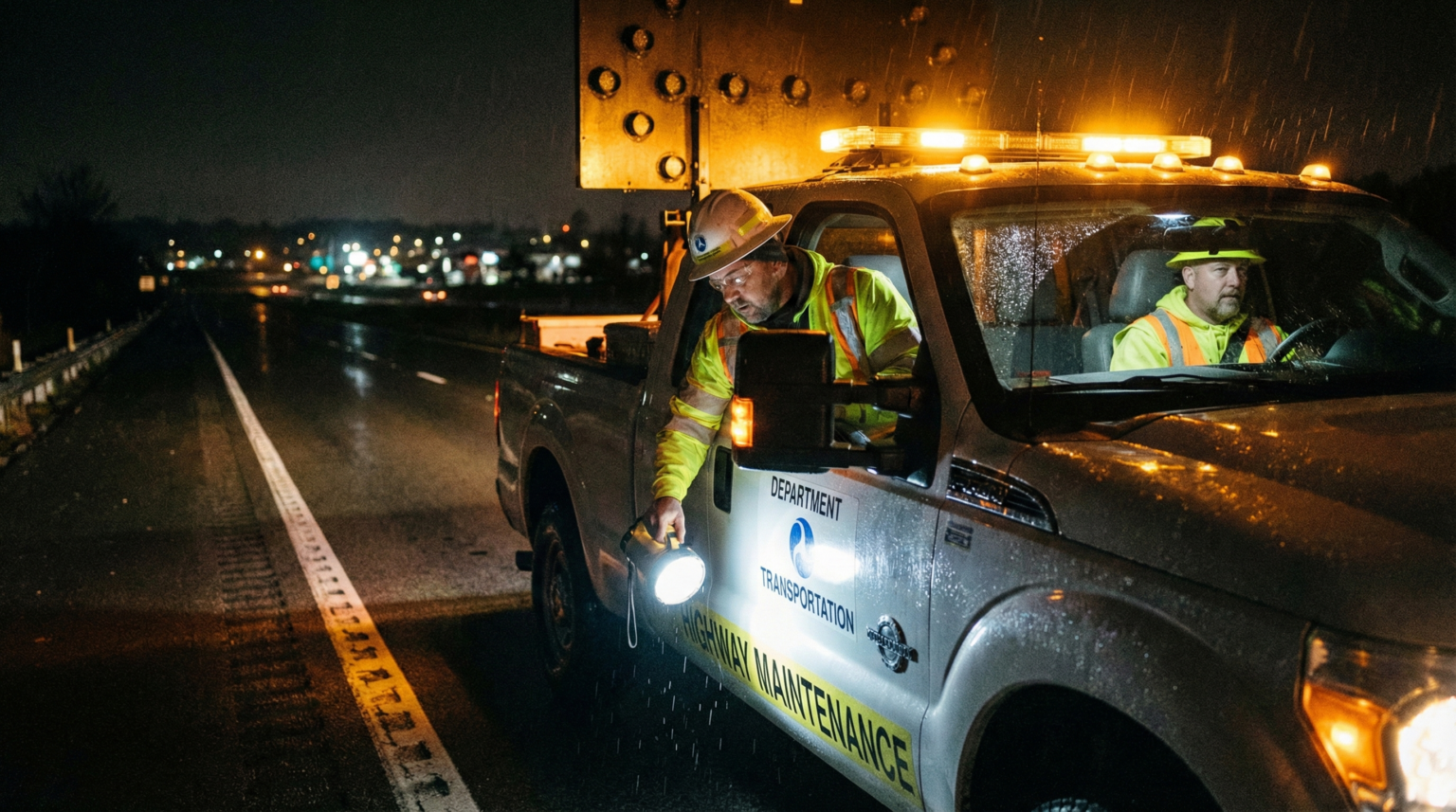
Manual Visual Inspections
Subjective, requires dangerous nighttime overtime labor, and provides no documented audit trail.
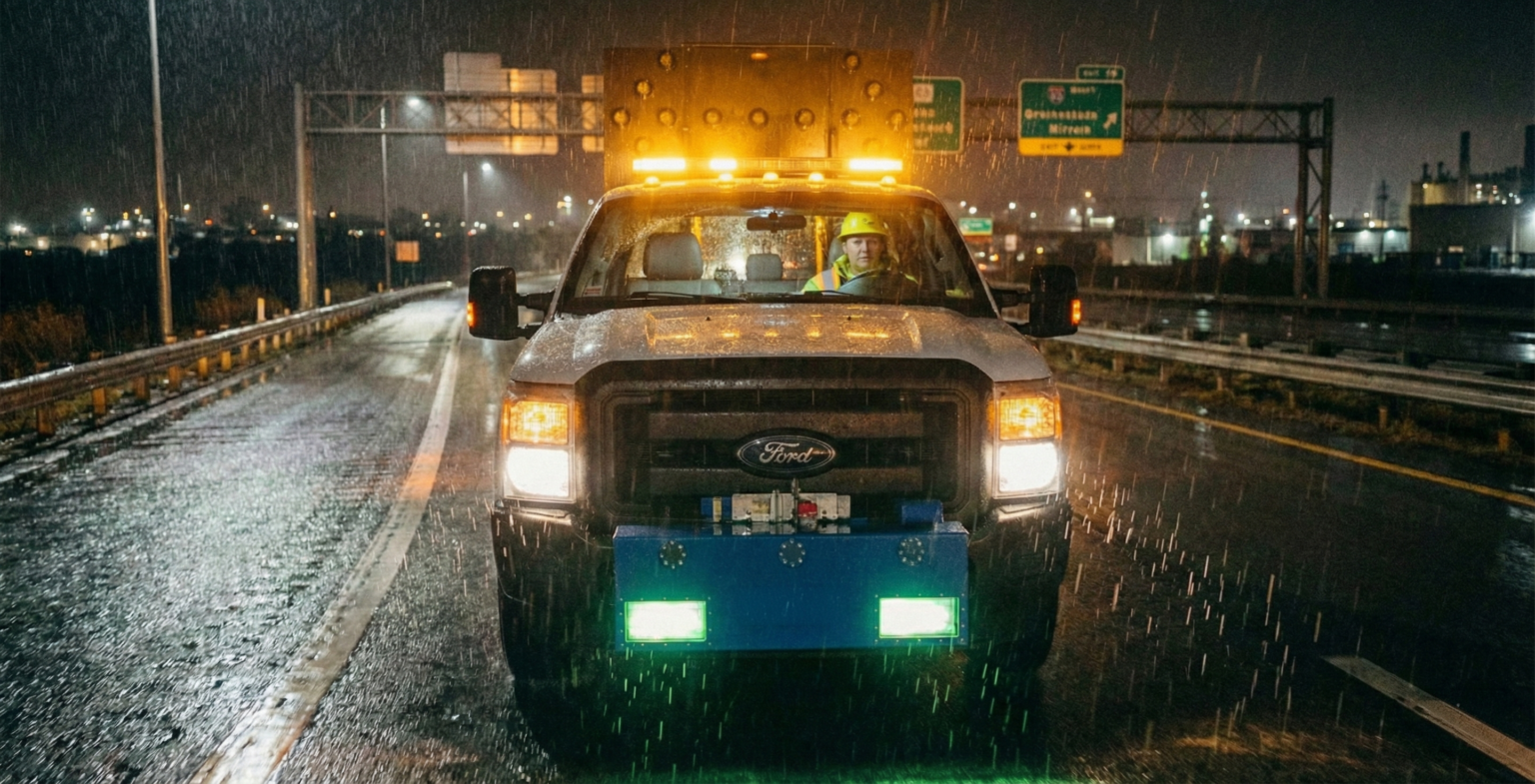
Mobile Retroreflectivity Units
Specialized fleets cost between $10.15 and $28.50 per line mile in recent state contracts—and only provide a single snapshot in time.
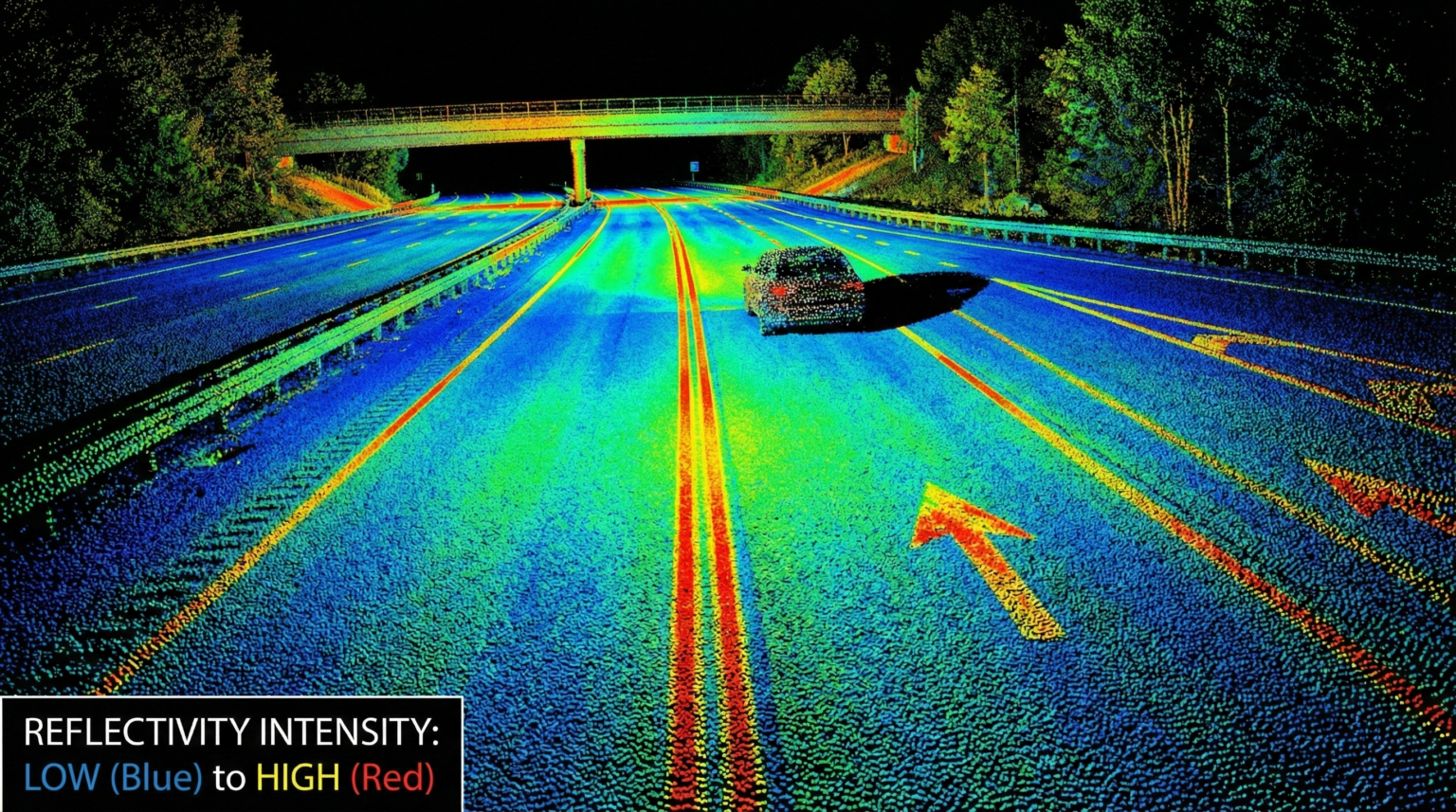
LiDAR Extraction
High-end mobile LiDAR can cost $3,800 per mile, with 50% of the cost dedicated to labor-intensive data extraction.
New Regulatory Codification
US DOT Formally Recognizes Computer Vision as an Eligible Maintenance Method
The US Department of Transportation has officially recognized the safety and operational benefits of computer vision—a specialized field of AI—confirming it as a valid technology for meeting FHWA retroreflectivity safety standards.
Official Committee Direction on Artificial Intelligence:
The US Department of Transportation recently codified the role of Artificial Intelligence in infrastructure health. The Committee recognizes the safety and operational benefits of computer vision in assisting infrastructure owners and operators to assess roadway conditions and damage to roadway assets—including missing signage, pavement damage, and other infrastructure concerns—without requiring human inspectors to enter dangerous or inaccessible areas. Furthermore, the Committee recognizes the critical importance of maintaining pavement marking and retroreflectivity for roadway safety.
What This Federal Recognition Means for Your DOT
- Official Technology Eligibility: Computer vision is now explicitly designated as an eligible technology for inspecting roadways and traffic control devices, removing the "bureaucratic barrier" to using AI for FHWA compliance.
- Priority on Personnel Safety: Federal guidance now emphasizes using AI and computer vision to assess roadway conditions specifically to prevent human inspectors from entering high-risk areas or active traffic lanes.
- Direct Support for 2026 Goals: The US DOT believes it is critical that non-federal stakeholders are informed of the eligibility of these computer vision technologies to ensure the 2026 pavement marking retroreflectivity standards are met efficiently.
- Proactive Posture: This codification represents a shift from reactive, manual fieldwork to a proactive and predictive posture across all core mission areas of roadway maintenance.
How it works
From Raw Imagery to Actionable Intelligence in 60 Seconds
Turn every vehicle on your road into a high-precision sensor, shifting your department from reactive patrols to a proactive, data-driven maintenance posture.
1
Passive Collection
Utilize 1,200,000+ dashcams already on the move
2
AI Analysis
Algorithms detect paint degradation and predict values with accuracy comparable to LiDAR
3
Actionable Delivery
Generate work orders from a real-time "Pass/Fail" map
Automated compliance in action
Hawaii Department of Transportation
The Hawaii Department of Transportation (HDOT) now utilizes Blyncsy to conduct an automated annual paint line retroreflectivity analysis across its entire state roadway network. By transitioning to AI-powered monitoring, HDOT satisfies the 2026 FHWA compliance requirements while significantly increasing departmental efficiency and maximizing maintenance budgets.
100% Compliance Achieved
HDOT uses Blyncsy for annual automated inspections of all state roads rated 35 MPH or greater to satisfy the new FHWA mandate.
$940,000 Annual Savings
95% Reduction in Field Risk
98% Faster Data Delivery
Carbon Footprint Reduction
Democratized Data at Scale
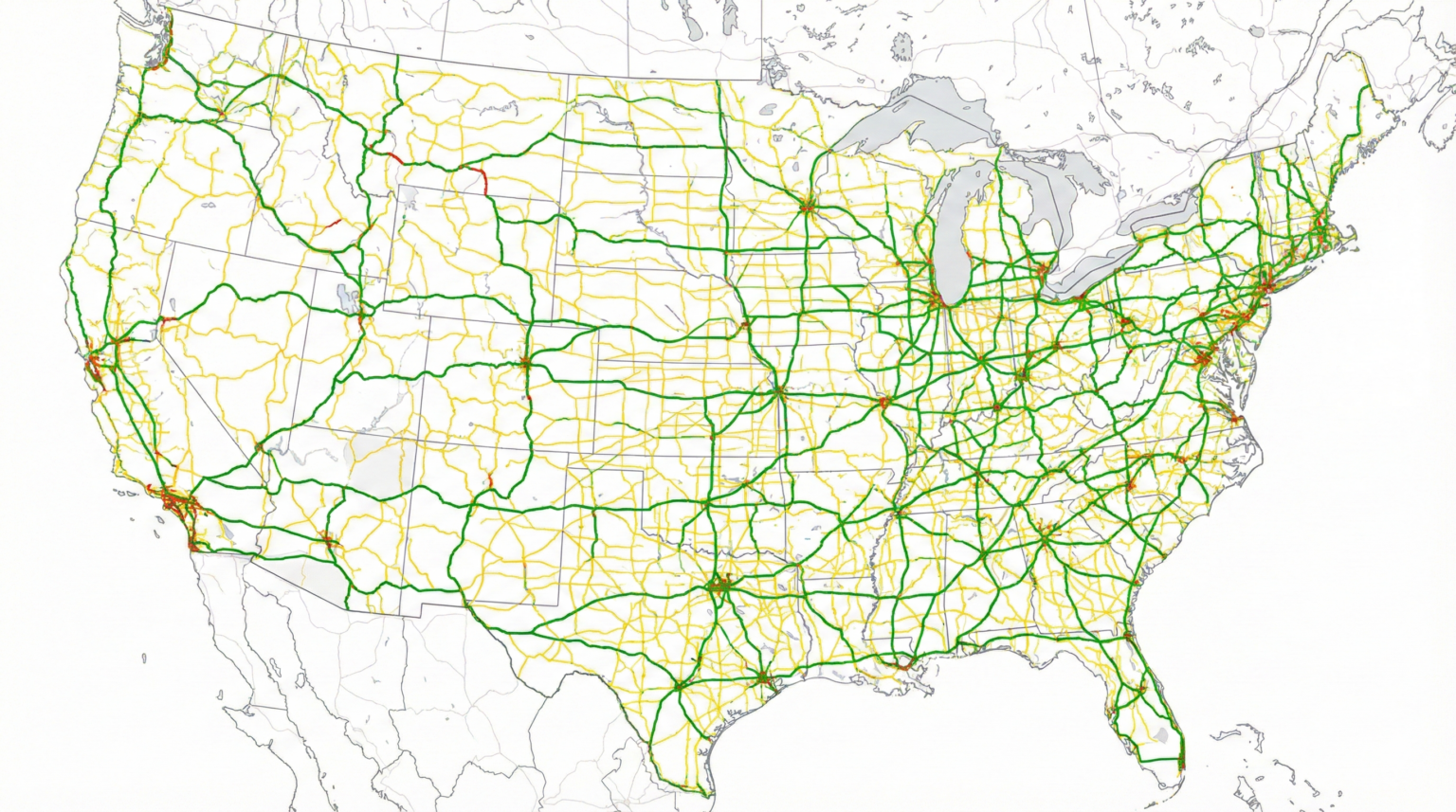
The First-Ever 35+ MPH Nationwide Compliance Map
Blyncsy has already collected and analyzed thousands of miles of the United States road network subject to the new federal regulations. This interactive map demonstrates the unmatched speed of our AI-driven solution—allowing state and local agencies to benchmark their own roadway data against our real-time network assessments.
Unmatched Collection Speed
Our AI-powered network captured over 3,200 centerline miles of paint retroreflectivity detections across all 50 state capitals in just four days—a feat that would take traditional crews months of manual fieldwork.
Direct Agency Benchmarking
Use the map to examine your own roads. We invite agencies to compare our crowdsourced pass/fail analysis with their internal records to see the precision and reliability of AI-driven monitoring.
Intuitive Pass/Fail Analysis
Every road segment is color-coded based on the new FHWA minimum standards. One glance gives you a network-wide view of where your infrastructure stands today relative to the 2026 deadline.
The "Ground Truth" Audit Trail
Transparency is built-in. Users can click any data point on the map to view the high-resolution dashcam image that triggered the pass/fail score, providing instant verification of roadway conditions.
Scroll and zoom in on the map to view individual cities. Click on any point of the “Pass/Fail” detection layer to view the image taken at that location.
Smart Answers to Smart Questions
Your Compliance Questions, Answered.
Transitioning to the new FHWA standards can be complex; we’ve compiled the most critical information to help your department move from uncertainty to network-wide compliance.
Which state and local agencies must comply with the FHWA pavement marking retroreflectivity regulation?
What are the minimum retroreflectivity levels for longitudinal pavement markings under the new rule?
According to MUTCD Section 3A.05, primary corridors (35 mph or greater) must maintain a mandatory minimum retroreflectivity level of 50 mcd/m²/lx. For high-speed arterials (70 mph or greater), the FHWA provides guidance recommending a minimum level of 100 mcd/m²/lx.